

Hospice vs Palliative Care: Key Differences San Antonio Families Need to Know

When a loved one is diagnosed with a chronic or advanced illness, navigating healthcare options can quickly feel overwhelming. You may hear doctors mention specialized comfort care, but sorting through the terminology often creates confusion. For many caregivers in San Antonio, understanding the distinction between hospice vs palliative care can bring immense clarity to a challenging situation. While both medical approaches share the core goal of improving quality of life and relieving pain, they serve patients at different stages of an illness and operate under distinct clinical guidelines.
Choosing the right type of support is about matching your relative's current health needs with the appropriate level of medical assistance. Both forms of care place physical comfort, dignity, and family emotional well-being at the forefront. However, key differences in treatment goals, prognosis requirements, and insurance rules determine which option is right for your family today. Here is a comprehensive guide to help you understand how these two compassionate care models work.
What Is Palliative Care?
Palliative care is specialized medical care focused on providing relief from the symptoms, pain, and stress of a serious illness. The primary goal is to improve quality of life for both the patient and their family members.
A defining feature of palliative care is that it can begin at the moment of diagnosis and continue alongside active, curative medical treatments. For instance, a patient undergoing chemotherapy for cancer, receiving dialysis for kidney disease, or taking aggressive medications for heart failure can receive palliative care simultaneously.
A palliative medical team works in partnership with your existing physicians. They focus on managing complex side effects, including:
- Severe physical pain and nerve discomfort
- Persistent nausea, loss of appetite, and fatigue
- Shortness of breath and respiratory distress
- Anxiety, depression, and emotional stress
Because palliative care is not restricted by prognosis, patients can receive this specialized support for years while actively working toward recovery or disease management. To learn more about symptom management frameworks, you can explore resources from the Center to Advance Palliative Care.
What Is Hospice Care?
Hospice care is a specialized form of palliative care designed specifically for individuals who are approaching the final stages of a terminal illness. When curative treatments are no longer effective, desirable, or medically beneficial, care shifts entirely toward comfort and dignity.
To qualify for hospice care, a physician must certify that the patient has a life-limiting diagnosis with an expected prognosis of six months or less if the illness follows its natural course. Rather than trying to cure the underlying disease, the care team focuses on managing symptoms so that the individual can live as comfortably and meaningfully as possible.
Hospice care provides a comprehensive support network that travels to wherever the patient lives. Services include:
- 24/7 Clinical Support: Visiting nurses who monitor symptoms, manage medications, and handle urgent health changes.
- Personal Care Aides: Certified aides who assist with daily hygiene, bathing, dressing, and gentle positioning.
- Medical Equipment and Supplies: Direct home delivery of hospital beds, oxygen concentrators, wheelchairs, and personal supplies at no cost to the family.
- Holistic Guidance: Dedicated social workers and non-denominational chaplains who support emotional, practical, and spiritual needs.
Families seeking detailed answers regarding hospice guidelines can review federal educational materials provided by the National Institute on Aging.
Key Differences: Hospice vs Palliative Care Explained
While both care models prioritize physical and emotional comfort, evaluating hospice vs palliative care side by side highlights clear operational differences that guide decision-making.
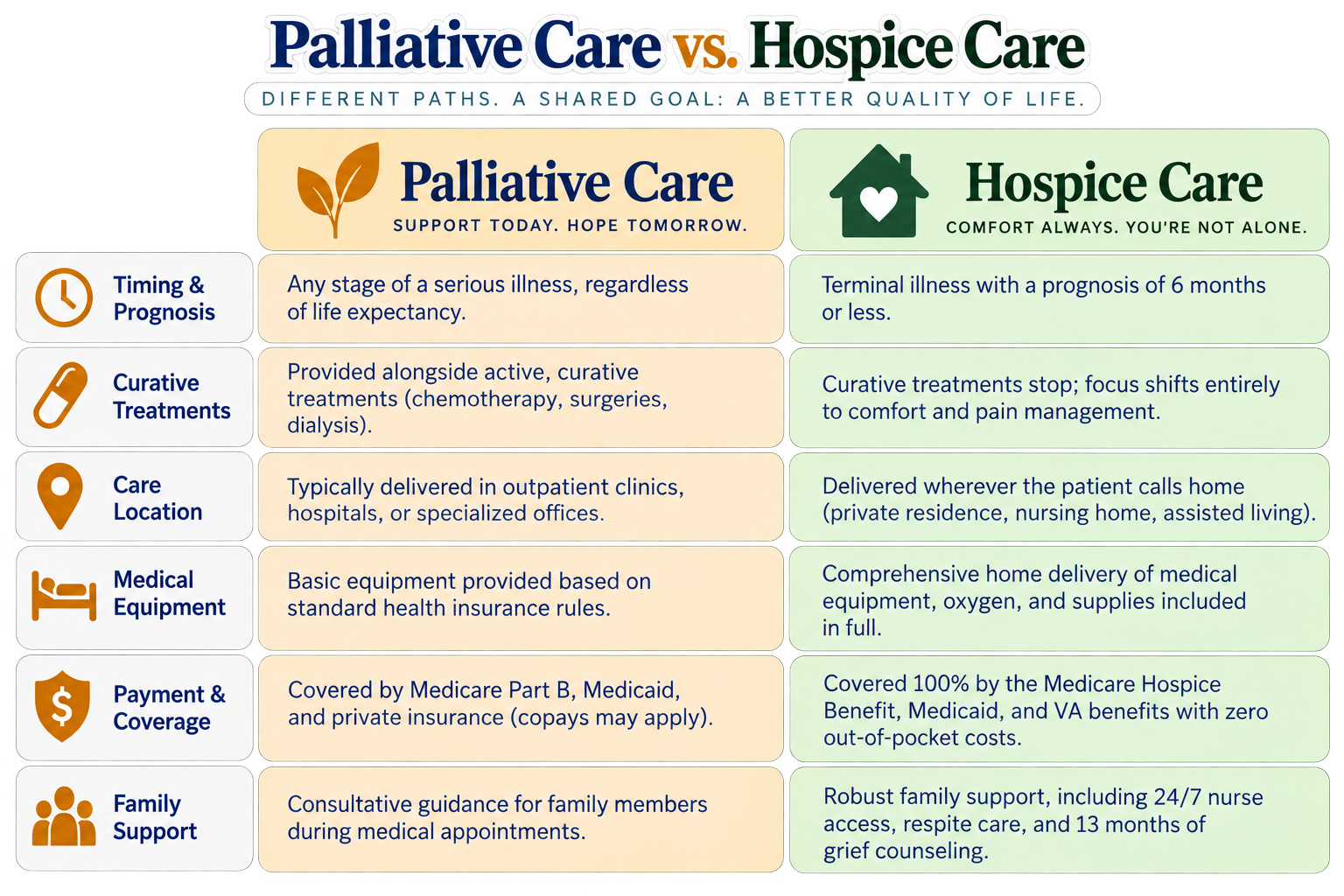
When evaluating hospice vs palliative care, the primary factor is whether active treatments are still being pursued. If your loved one is actively seeking a cure or undergoing aggressive therapies, palliative care is the appropriate choice. If the focus has shifted exclusively to comfort and spending peaceful time at home, hospice care provides the necessary wrapped-around support.
Can a Patient Transition From Palliative Care to Hospice Care?
Yes, transitioning from palliative care to hospice care is a natural progression for many patients as an illness advances. Over time, aggressive medical treatments may become too exhausting or cease to produce positive clinical results.
When a physician determines that the disease has progressed to an advanced stage, the palliative care team assists the family in making a smooth transition to hospice care. Because the patient is already familiar with comfort-focused care, shifting to a dedicated hospice program feels like a natural step rather than a abrupt change.
Furthermore, if a patient on hospice care experiences a stabilization or temporary improvement in health, they can choose to graduate or revoke hospice care at any time to resume curative therapies.
How Insurance Covers Both Options
Another core distinction in hospice vs palliative care involves payment models and insurance coverage structure.
Palliative care visits are typically billed like regular specialist medical appointments. Services are covered under Medicare Part B, Medicaid, or private health insurance plans, though standard copays, deductibles, or coinsurance fees may apply depending on your specific policy.
In contrast, hospice care is covered under a dedicated, all-inclusive federal benefit. For eligible seniors, the Medicare Hospice Benefit covers 100 percent of all clinical visits, nursing care, personal aides, medical equipment, and symptom-related prescription drugs. Families facing an advanced illness rarely incur any out-of-pocket expenses for hospice services.
For detailed information on eligibility and covered expenses, visit our educational overview on Hospice 101.
Making the Right Choice for Your Family in San Antonio
Deciding between care options comes down to understanding your loved one's current health status, personal wishes, and daily needs. Families comparing hospice vs palliative care in Texas should know that both focus on dignity, respect, and relief from suffering.
If your relative is struggling with frequent hospital admissions, unmanageable pain, or severe fatigue, reaching out for an expert evaluation can provide clear guidance. You do not need to wait for a physician to bring up comfort care; family members can contact local care coordinators directly to discuss their options.
At AIP Hospice, we help San Antonio families navigate these exact decisions every day. Our team takes the time to listen, review medical records, and explain how our specialized in-home hospice care supports both patients and family caregivers.
If you are unsure whether hospice vs palliative care is appropriate for your loved one in Bexar County, our care coordinators are available 24 hours a day to answer your questions. Contact AIP Hospice today or call us directly at (210) 260-0000 to schedule a gentle, no-obligation conversation.