

In-Home Hospice Care vs. Nursing Home Support: Which Is Right for Your Family?
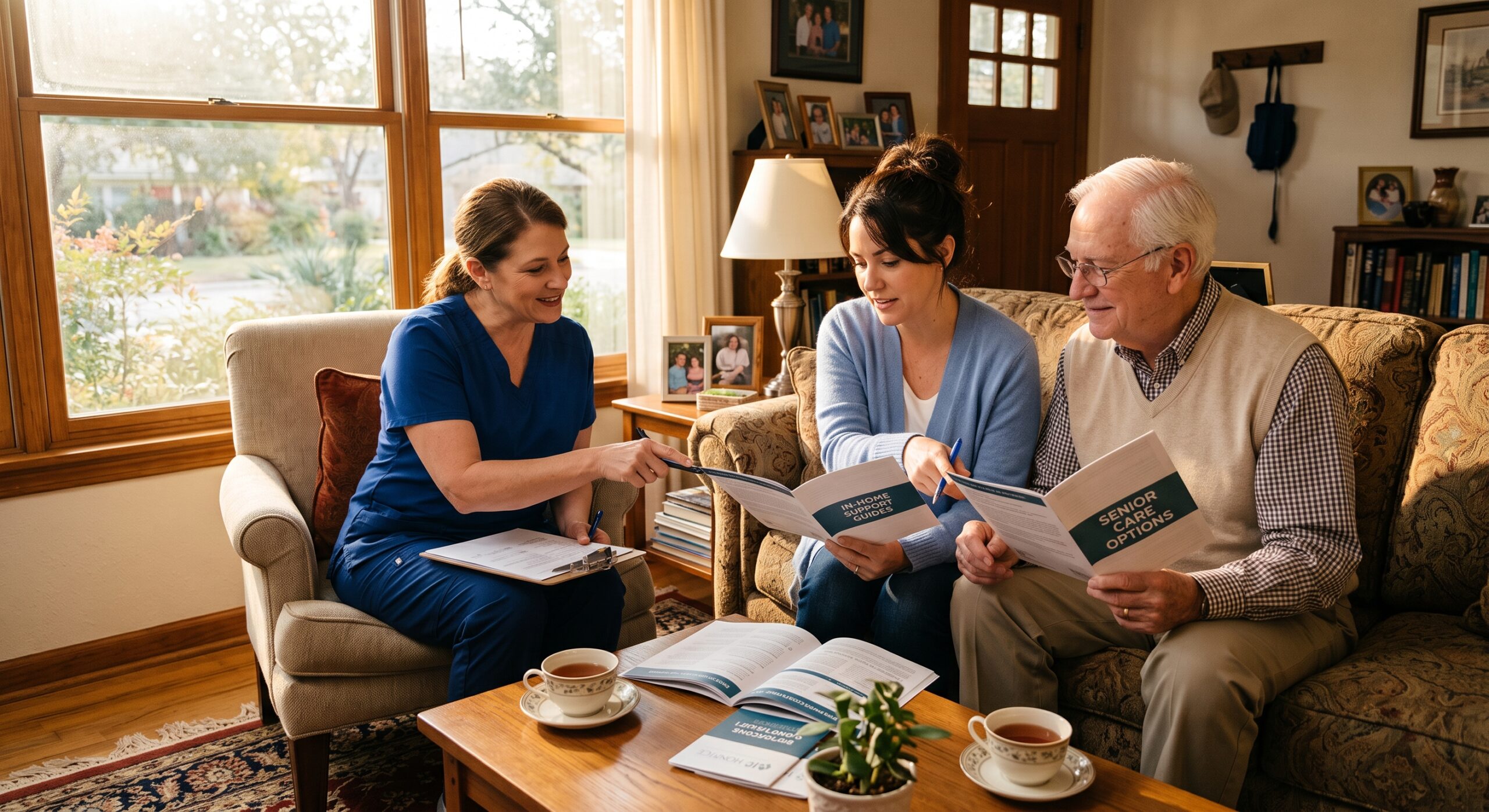
When an aging loved one faces an advanced illness, comparing in-home hospice vs nursing home support is one of the most critical decisions your family will navigate. Many caregivers assume that entering hospice requires moving a relative into a medical facility, while others worry that staying at home will place an unbearable physical burden on family members. Understanding the distinct benefits of in-home hospice vs nursing home care allows families across Bexar County to select a setting that maximizes comfort, dignity, and peace of mind.
Hospice care is not a physical place; it is a specialized philosophy of medical care that travels wherever the patient lives. Whether a loved one resides in a private house in San Antonio or resides in a residential healthcare facility, a dedicated hospice team provides wrapped-around clinical support. Evaluating how daily routines, staffing models, and financial structures differ between settings helps you make the right choice for your family.
What Is In-Home Hospice Care?
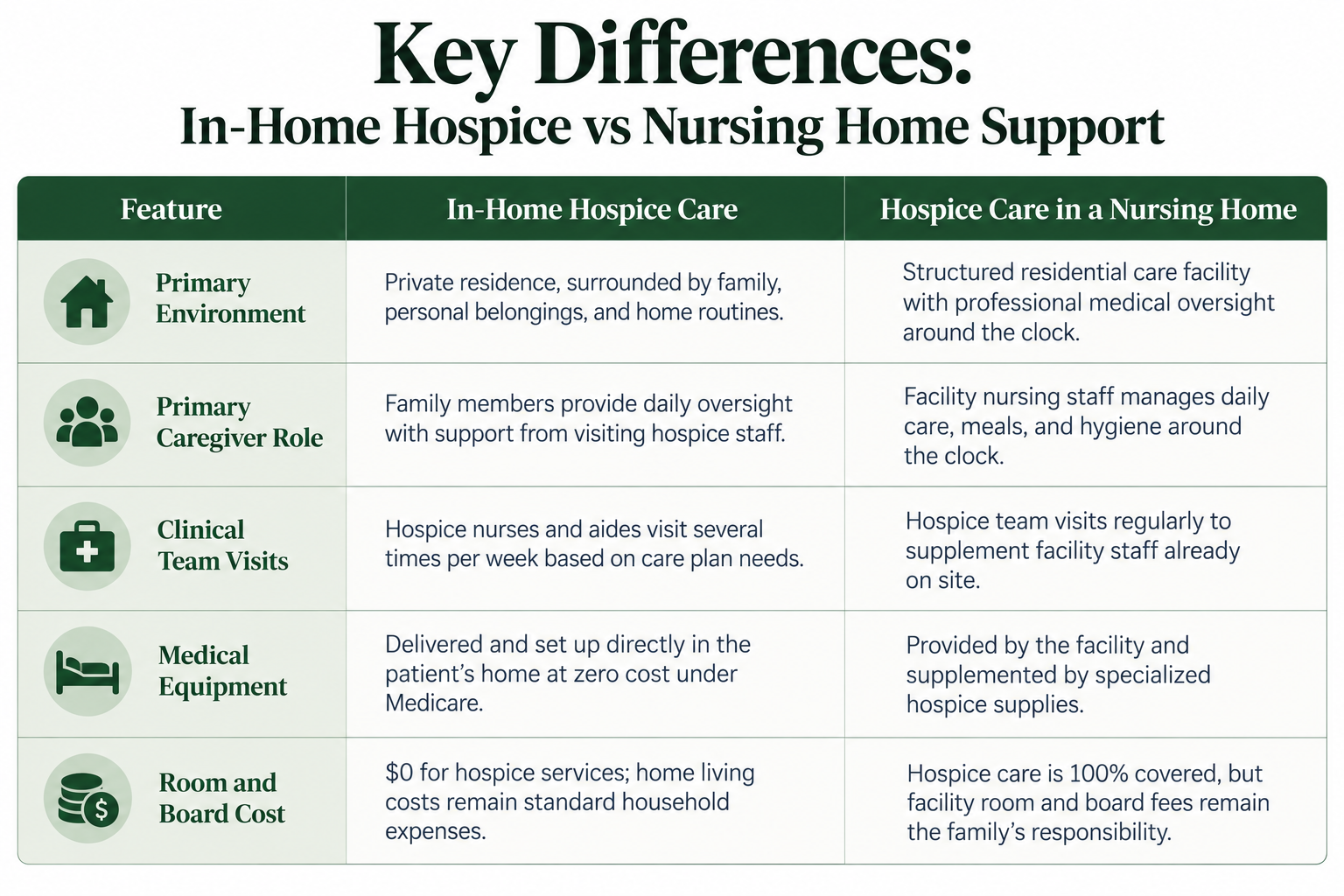
In-home hospice care brings a complete interdisciplinary team directly into a patient’s private residence, personal care home, or relative’s house. The goal is to keep the patient resting comfortably in familiar surroundings, surrounded by personal memories, pets, and family members.
When care occurs at home, a clinical team visits on a scheduled basis and remains available 24/7 for urgent needs:
- Registered Nurses: Visit regularly to monitor symptom progression, adjust comfort medications, and coordinate physician orders.
- Hospice Aides: Provide hands-on help several times a week with personal hygiene, bathing, dressing, and gentle mobility.
- Equipment & Supplies: Hospital beds, oxygen systems, wheelchairs, and incontinence supplies are delivered directly to the doorstep at no charge.
- Family Role: Family members act as the primary day-to-day caregivers, managing routine meals and medication administration with guidance from visiting nurses.
For a deeper look into home care setups, explore our guide on in-home hospice care.
What Is Hospice Support in a Nursing Home?
When a patient lives in a skilled nursing facility or assisted living community, hospice care functions as an added layer of specialized support rather than a replacement for facility staff. The nursing home staff manages daily room, board, meals, and continuous basic care, while the hospice agency provides specialized end-of-life clinical management.
Partnership care in a facility offers distinct advantages:
- 24/7 On-Site Staffing: Facility nurses and aides are always present to assist with immediate physical needs, positioning, and safety monitoring.
- Specialized Pain Management: The visiting hospice team collaborates directly with facility nurses to refine pain control protocols and order specialized medical gear.
- Dual Support System: The patient receives routine care from familiar facility staff alongside expert visits from hospice social workers, chaplains, and registered nurses.
Families considering this option can learn more about collaborative facility plans on our Nursing Home Support page.
When evaluating in-home hospice vs nursing home setups, the central decision revolves around caregiver capacity and safety. If family members are available and physically capable of assisting between nurse visits, the comfort of home is often ideal. If a patient requires round-the-clock physical assistance or has severe mobility limitations, facility placement with supplemental hospice oversight provides essential safety.
Financial Considerations: How Coverage Works in Each Setting
For families weighing in-home hospice vs nursing home placement based on budget, understanding insurance structures brings financial clarity.
The Medicare Hospice Benefit
Under the Medicare Hospice Benefit, 100 percent of clinical hospice care is covered regardless of location. Medicare Part A pays for visiting nurses, social workers, chaplains, medical equipment, and symptom-related medications with zero copays or deductibles.
Room and Board Distinctions
- At Home: There are no additional facility charges. All hospice medical support is fully covered.
- In a Nursing Home: Medicare covers all hospice-specific services, medical equipment, and medications. However, Medicare does not cover standard monthly room and board fees charged by the nursing facility unless the patient qualifies for long-term care Medicaid or private insurance coverage.
Detailed financial breakdowns are available in our educational resources under Hospice 101.
Key Decision Factors for San Antonio Families
To decide which environment best serves your relative's needs, consider these four core questions:
- What Is the Current Level of Caregiver Exhaustion?
If family caregivers are experiencing severe physical fatigue or burnout, placing a loved one in a residential facility with hospice support can restore family relationships and ensure safety.
- Does the Patient Have Advanced Dementia or Memory Loss?
Patients with severe cognitive decline often experience heightened confusion when moved to new environments. Staying in a familiar home setting with visiting hospice support helps preserve emotional stability.
- What Are the Home Safety Conditions?
Consider whether the home can accommodate medical equipment like hospital beds or wheelchairs. Narrow doorways or steep stairs may make facility support a safer alternative.
- Is 24-Hour Physical Supervision Required?
While hospice offers 24/7 telephone guidance and emergency visits, it does not supply a full-time caregiver at home 24 hours a day. If continuous physical monitoring is required, a nursing facility or assisted living community may be necessary. Explore options on our Assisted Living & Personal Care Home Support page.
Compassionate Guidance Across Bexar County
Whether you ultimately choose in-home hospice vs nursing home support, AIP Hospice brings compassionate, expert care directly to your loved one's bedside.
At AIP Hospice, we serve families across San Antonio and surrounding communities within 50 miles of the medical center. As a family-owned, CHAP-accredited, and US FCR-listed provider, our registered nurses maintain lower patient caseloads than standard corporate agencies. This ensures unhurried visits, 30-minute emergency response times, and personalized attention 24 hours a day.
If you need help evaluating care settings for a family member in San Antonio, our local care coordinators are ready to assist you day or night. Contact AIP Hospice today or call us directly at (210) 260-0000 to discuss your family's needs.