

Routine Hospice vs. General Inpatient Care (GIP): What Happens When Symptoms Escalate?
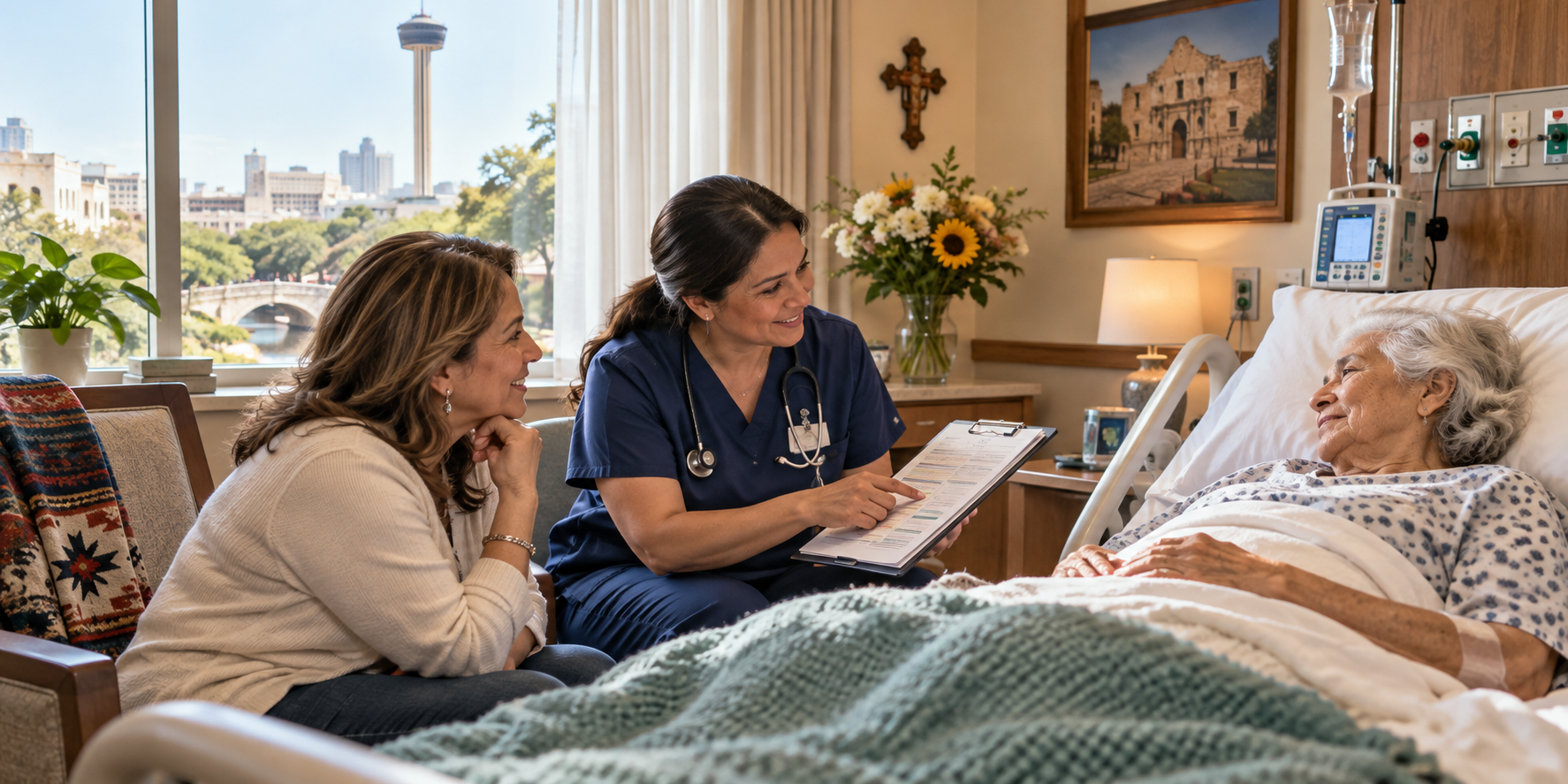
When caring for an individual with an advanced, life-limiting illness, most families envision peaceful comfort delivered in the familiar surroundings of home. However, sudden medical complications, severe pain crises, or respiratory distress can occasionally overwhelm standard home care protocols. In these urgent moments, accessing general inpatient hospice care San Antonio families depend on ensures that severe physical distress is brought under swift medical control without subjecting the patient to traumatic emergency room cycles.
Hospice care is designed to be adaptable. Rather than being confined to a single static setting, Medicare defines four distinct levels of care that match the clinical acuity of the patient at any given moment. Understanding the difference between Routine Home Care and General Inpatient (GIP) care helps families make swift, informed decisions when sudden symptom spikes occur.
The Four Levels of Hospice Care Defined by Medicare
The Centers for Medicare & Medicaid Services (CMS) establishes four distinct levels of hospice care to guarantee that patients receive appropriate clinical intensity throughout the progression of their illness:
- Routine Home Care (RHC): The foundational level of hospice care. Interdisciplinary team members (registered nurses, hospice aides, social workers, and chaplains) conduct regular scheduled visits to wherever the patient resides (a private house, assisted living apartment, or nursing home).
- Continuous Home Care (CHC): Short-term intensive nursing care delivered in the home setting for brief periods of acute crisis (minimum 8 hours of care per 24-hour period, predominantly nursing) to keep the patient from needing a hospital transfer.
- Inpatient Respite Care (IRC): A scheduled stay of up to 5 consecutive days in an approved inpatient facility designed exclusively to give family caregivers physical and emotional rest.
- General Inpatient Care (GIP): Short-term, hospital-level medical care provided in an approved acute-care facility or hospital setting for intensive symptom management and pain crises that cannot be safely managed in any other environment.
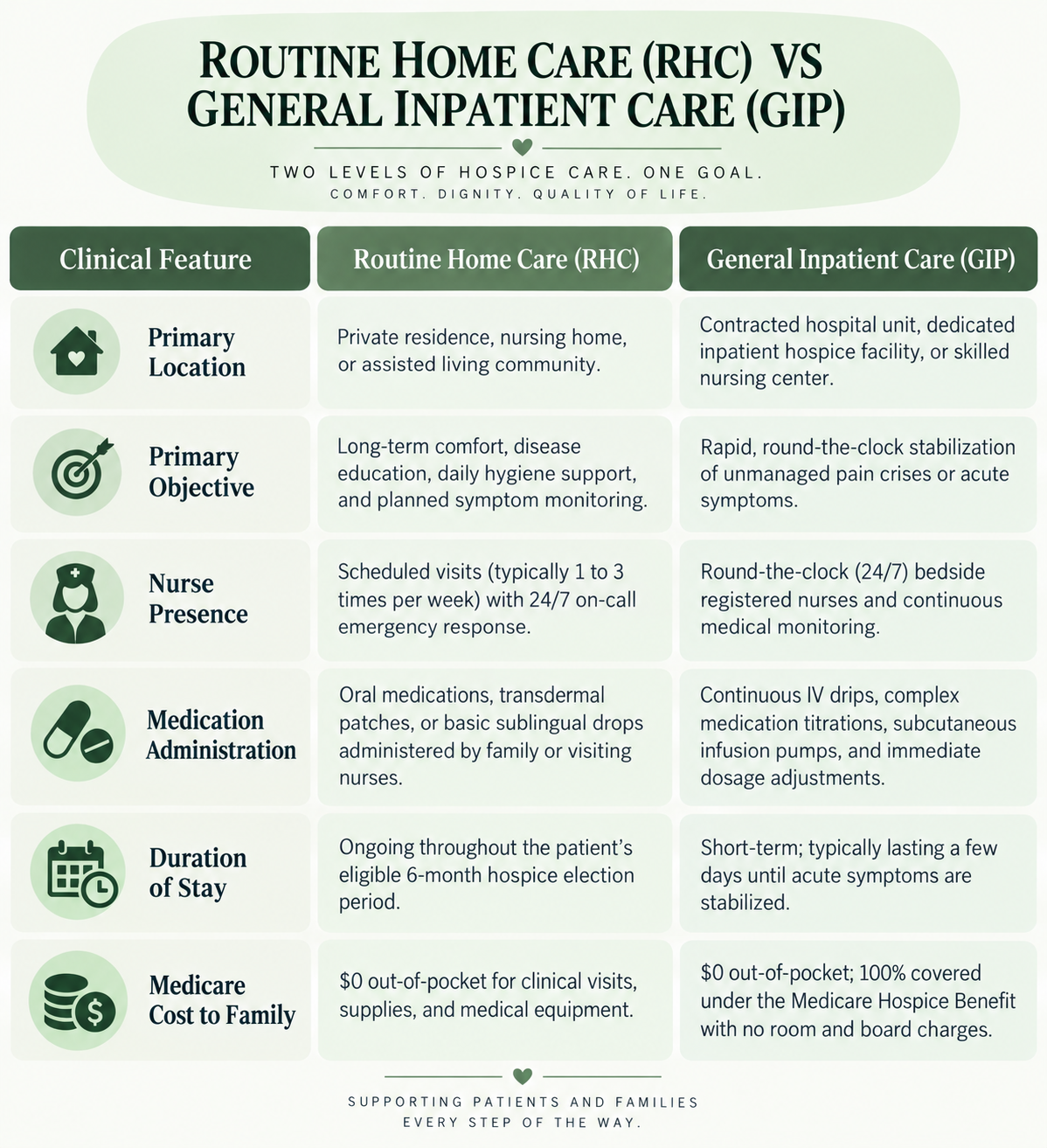
Routine Home Hospice vs. General Inpatient Care (GIP)
While both levels share the same compassionate philosophy of comfort and dignity, their clinical scopes, staffing ratios, and immediate objectives differ fundamentally:
When Does a Patient Qualify for General Inpatient Hospice Care?
General Inpatient care is not intended for long-term residential placement or general caregiver breakdown. According to federal regulations, general inpatient hospice care San Antonio physicians order must meet specific clinical criteria demonstrating that outpatient interventions are insufficient.
Common clinical triggers requiring a transition to GIP include:
- Intractable Physical Pain: Severe breakthrough pain that does not respond to escalating oral or transdermal analgesics and requires continuous intravenous (IV) or subcutaneous medication titration.
- Severe Respiratory Distress: Sudden, uncontrollable shortness of breath, acute air hunger, or pulmonary edema requiring intensive clinical monitoring and specialized suctioning.
- Uncontrolled Nausea and Vomiting: Persistent emesis that prevents oral medications from being absorbed, requiring intravenous antiemetic regimens and hydration therapy.
- Acute Agitation or Delirium: Severe terminal restlessness, hallucinations, or combativeness that presents an immediate safety risk to the patient and cannot be stabilized with routine home sedatives.
- Complex Wound Care: Severe pressure ulcers, surgical breakdowns, or malignant wounds requiring frequent, specialized dressing changes and intensive pain management during wound debridement.
- Impending Imminent Crises: Seizure activity that cannot be halted with routine rectal or sublingual anticonvulsants.
Families can review clinical symptom thresholds and patient rights through the National Hospice and Palliative Care Organization (NHPCO).
How General Inpatient Care Works in San Antonio Hospitals
When a loved one experiences a symptom crisis in Bexar County, navigating hospital bureaucracy can feel paralyzing. If a patient is already in an acute-care hospital like Methodist Hospital, Baptist Health System, or University Health, or if their home condition suddenly deteriorates, a specialized hospice team steps in immediately.
Under GIP status, the patient does not lose their hospice benefit. Instead, the hospice agency assumes direct clinical coordination of the patient's care plan within the hospital environment:
- Standing Hospital Contracts: Top-tier hospice providers maintain standing GIP agreements with premier local hospital systems. This eliminates bureaucratic delays, avoiding the need for individual "single-case" contract negotiations during an active medical emergency.
- Bedside Nurse Advocacy: A dedicated hospice nurse works side by side with the hospitalist and floor nursing staff, ensuring that comfort orders, pain protocols, and family wishes remain the central focus of care.
- Daily Medical Evaluation: A hospice physician or medical director evaluates the patient daily to assess symptom control, monitor medication response, and determine when stabilization has occurred.
What Happens Once Symptoms Are Stabilized?
A core concept of GIP care is its short-term nature. Once the medical team successfully manages the patient's pain, breathlessness, or nausea, federal guidelines require the patient to transition back to routine care.
This transition is planned collaboratively with the family:
- Returning Home: The hospice team coordinates all necessary durable medical equipment (such as hospital beds, specialized oxygen concentrators, and alternating pressure mattresses) to arrive at the residence prior to discharge.
- Transferring to Residential Care: If the family determines that home caregiving is no longer physically viable, the hospice social worker coordinates a smooth transition directly into an assisted living or nursing home setting.
- Continued Routine Support: The exact same hospice clinical team that managed the inpatient crisis continues visiting the patient in their home environment, ensuring absolute continuity of care.
To learn more about setting up long-term comfort at home following a hospital discharge, explore our comprehensive guide to In-Home Hospice Care.
Rapid, Dignified Crisis Care Across San Antonio
Facing a sudden medical crisis with an advanced illness is overwhelming, but you do not have to navigate hospital corridors or escalating symptoms on your own. Accessing general inpatient hospice care San Antonio families trust provides immediate medical relief, returning calmness and comfort to your loved one when every hour counts.
At AIP Hospice, we believe crisis care requires immediate action, not administrative delays. As a CHAP-accredited, family-owned provider listed on the US FCR, we maintain standing GIP contracts with the Methodist Healthcare System in San Antonio, ensuring seamless hospital admissions across Bexar County. Our nurses maintain half the caseload of typical corporate agencies, allowing us to guarantee a 30-minute response time on every referral and emergency call, 24 hours a day, 7 days a week.
Whether your family needs routine comfort at home or urgent hospital-level stabilization, explore our specialized General Inpatient & Hospital Support services.
If your loved one is currently experiencing unmanaged pain or you are facing an urgent hospital discharge decision, our clinical team is ready to help tonight. Contact AIP Hospice today or call our direct clinical line at (210) 260-0000 for immediate bedside support.