

How to Use Medicare’s 5-Day Hospice Respite Benefit in San Antonio

Caring for a seriously ill loved one at home is one of the most generous acts of love a person can offer, but the physical and emotional toll can quickly become overwhelming. Weeks of interrupted sleep, constant medication schedules, lifting, and the emotional weight of anticipating loss lead to a severe state of physical exhaustion known as caregiver burnout. When primary caregivers push themselves past their limits, their own health deteriorates, jeopardizing the safety and quality of care their loved one receives.
Recognizing this reality, federal regulations built an essential relief valve into the hospice system. Utilizing medicare hospice respite care San Antonio families can access provides up to five consecutive days of short-term inpatient care for the patient in a certified medical facility. This temporary stay gives family members the time they need to rest, recover from illness, or attend to personal obligations with absolute confidence that their loved one is safe, comfortable, and professionally attended.
What Is Medicare Inpatient Respite Care?
Under the Centers for Medicare & Medicaid Services (CMS), Inpatient Respite Care (IRC) is one of the four statutory levels of hospice care covered by Medicare Part A. It is created specifically for the physical and emotional relief of the primary unpaid caregiver, rather than for the management of an acute medical crisis.
Key statutory guidelines governing respite care include:
- Duration: Up to five consecutive days per respite period. Medicare counts the day of admission as Day 1; the patient returns home on or before Day 5.
- Approved Facilities: Respite care must take place in an approved, Medicare-certified inpatient facility, such as a contracted skilled nursing facility (SNF), a dedicated hospice inpatient facility, or a contracted hospital unit. It cannot be delivered as unassisted days at home.
- Frequency: Medicare allows respite stays to be used on an occasional basis throughout the patient's hospice benefit period. While there is no rigid monthly cap, it is designed for intermittent renewal rather than permanent residential placement.
- Complete Care Continuity: During the respite stay, the patient continues to receive their full routine hospice services, physician oversight, prescription pain medications, and nursing care.
Respite Care vs. General Inpatient Care (GIP)
Families frequently confuse Inpatient Respite Care with General Inpatient Care (GIP), as both take place outside the private home in a clinical facility. However, their primary clinical goals and qualification requirements are entirely different:
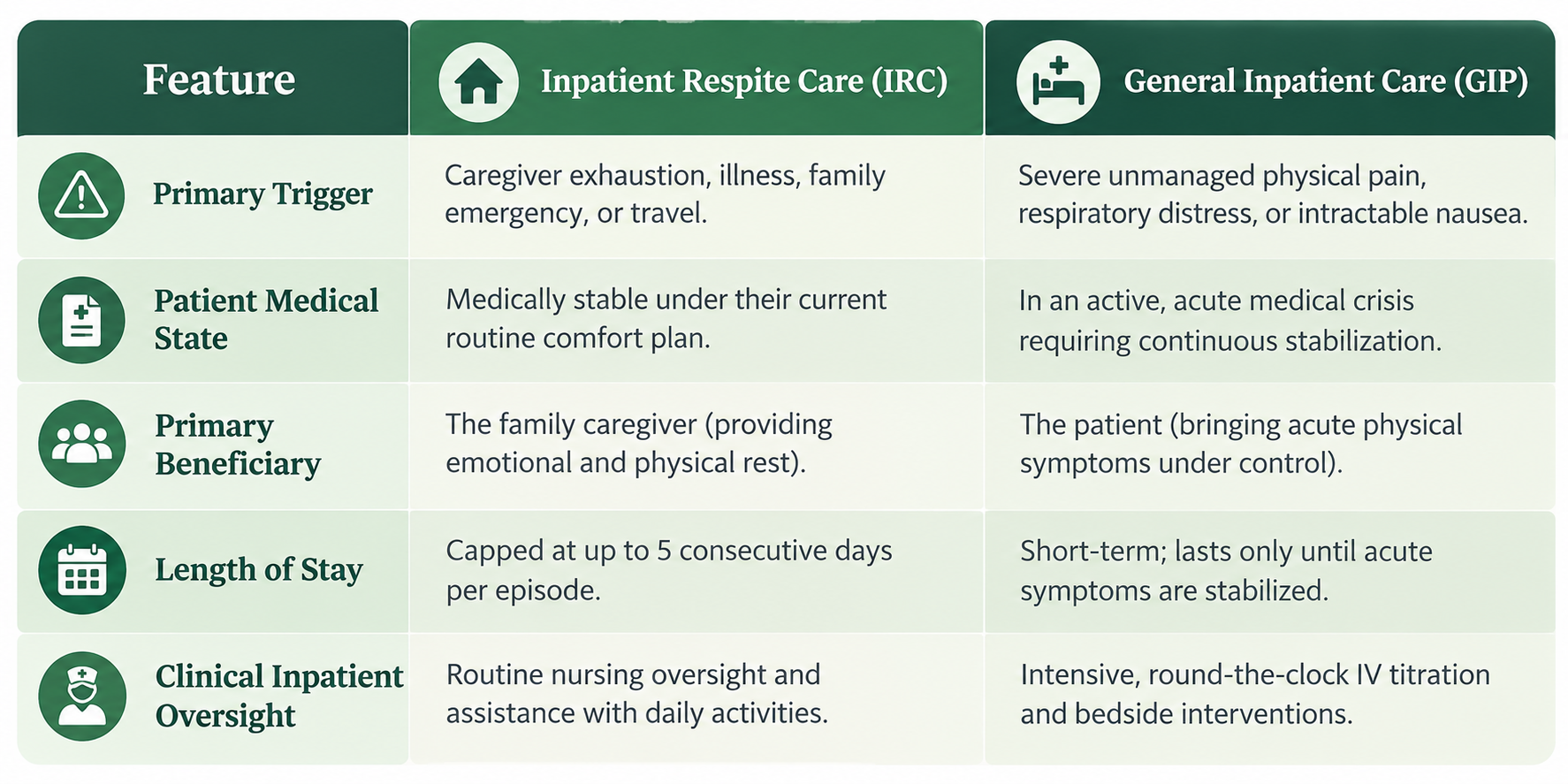
If your loved one’s pain or shortness of breath has suddenly spiked and home medications are no longer sufficient, they may require hospital-level stabilization rather than respite. To understand how crisis medical interventions work, review our complete guide on Routine Hospice vs. General Inpatient Care (GIP).
Recognizing Caregiver Burnout: When to Schedule a Respite Stay
Many devoted spouses and adult children feel unjustified guilt when considering respite care, believing that admitting a relative to a facility for five days represents personal failure. In truth, scheduling a 5 day hospice respite stay is a proactive medical decision that protects both parties.
Consider requesting a respite stay if you observe any of the following warning signs:
- Physical Depletion and Sleep Fragmentation: Chronic insomnia, waking every two hours to turn a parent or administer drops, or experiencing physical tremors and back strain from lifting.
- Caregiver Illness or Medical Procedures: The primary caregiver comes down with the flu, develops COVID-19, or requires a scheduled outpatient surgery or medical procedure of their own.
- Escalating Irritability and Emotional Numbness: Feeling chronic resentment, cognitive brain fog, panic attacks, or tearfulness when managing standard daily routines.
- Significant Family Events: Attending an out-of-town graduation, wedding, or funeral that requires leaving San Antonio for a few days without an available secondary caregiver.
Clinical research from the National Institute on Aging (NIA) demonstrates that structured respite breaks significantly reduce long-term caregiver depression, cardiovascular strain, and preventable home accidents.
How the 5-Day Respite Stay Works in Practice
Navigating a respite stay is straightforward when guided by an experienced clinical team. The process follows a structured timeline designed to minimize disruption to the patient's routine:
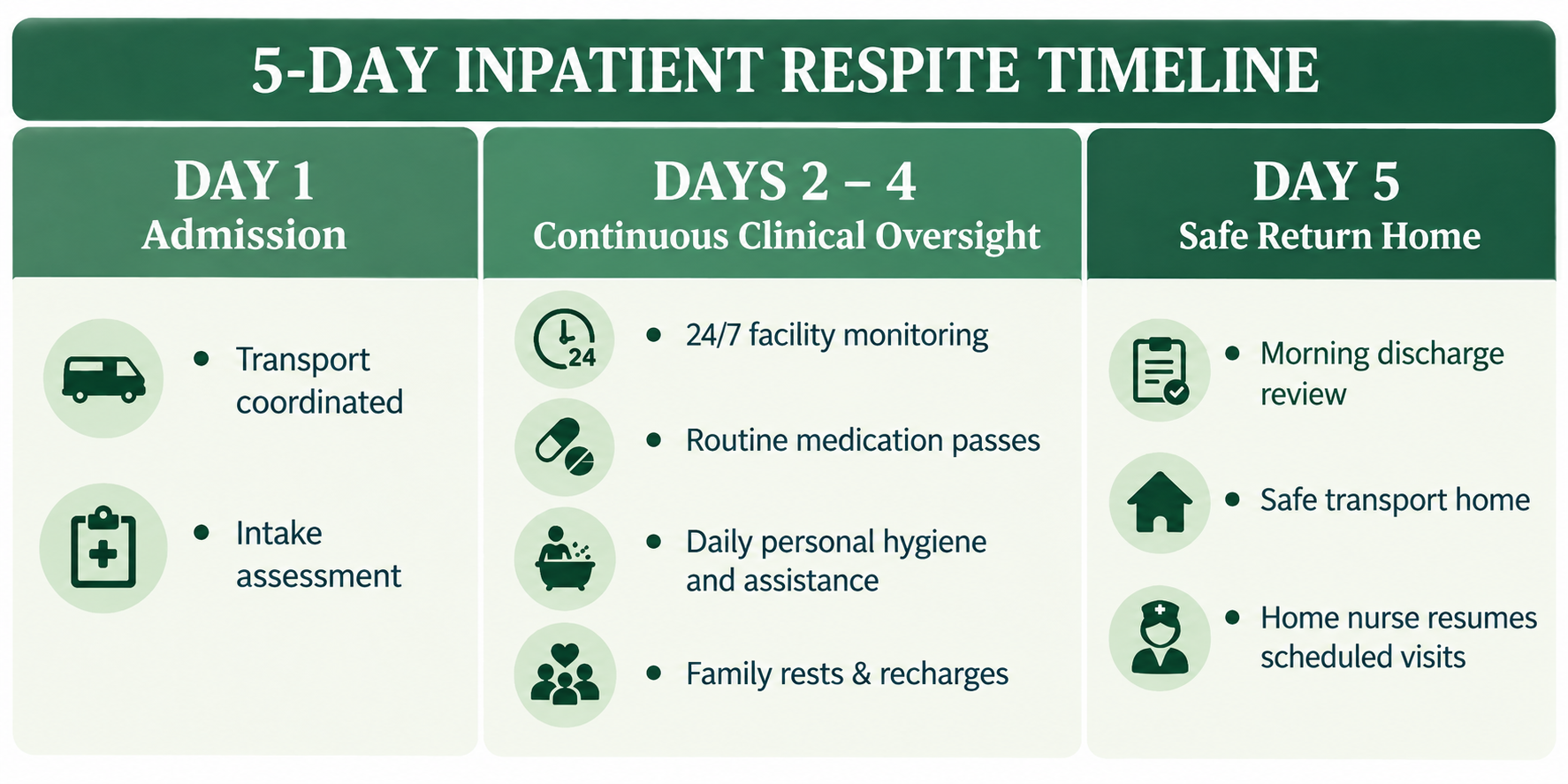
- Step 1: Planning and Logistics: You notify your hospice care coordinator that you need a respite break. The agency handles facility availability, secures the clinical reservation, and arranges non-emergency medical transportation if needed.
- Step 2: Medication and Supply Transfer: All specialized comfort medications, personal hygiene items, and symptom protocols are transferred directly to the contracted facility, ensuring zero missed doses.
- Step 3: During the Stay: The facility nursing staff provides 24-hour bedside assistance, bathing, and meals, while your AIP Hospice registered nurse continues to visit and supervise the care plan. Family members are welcome to visit whenever they wish, or disconnect entirely to rest.
- Step 4: Discharge and Home Transition: On the fifth day, the hospice team coordinates discharge. The patient returns safely to their home bed, where routine home hospice visits immediately resume.
What Does Respite Care Cost? Understanding Medicare Coverage
One of the greatest reliefs for families navigating caregiver burnout hospice texas programs address is financial clarity.
Under the Medicare Hospice Benefit:
- The Clinical and Facility Stay: Medicare Part A covers the vast majority of all costs associated with the 5-day inpatient respite stay, including the room, board, meals, nursing staff, and comfort medications.
- Statutory Coinsurance: By federal law, Medicare regulations allow for a 5% coinsurance payment of the Medicare-approved daily respite rate (which typically equates to a nominal $5 to $10 per day, capped at the annual inpatient hospital deductible).
- Zero Hidden Facility Invoices: Families are never billed for separate facility room fees, housekeeping surcharges, or linen fees during an authorized respite stay.
To learn more about how Medicare structures coverage across all stages of care, explore our plain-English overview in Hospice 101.
How AIP Hospice Coordinates Respite Stays Across Bexar County
When scheduling temporary inpatient care, the quality and reputation of the receiving facility matter deeply to families. You want to know that your relative will be treated with the same tenderness, gentleness, and respect they receive in their own living room.
At AIP Hospice, we eliminate the logistical stress of planning respite:
- Vetted Inpatient Partners: We maintain direct clinical agreements with top-rated skilled nursing centers and inpatient healthcare environments throughout San Antonio and within 50 miles of the medical center.
- Complete Care Continuity: Your loved one is not handed off to strangers. AIP Hospice nurses and aides visit the patient inside the respite facility, verifying that their comfort medication schedule and personal care preferences remain undisturbed.
- Bilingual Communication: For Hispanic families across South Texas, our bilingual nurses and coordinators ensure that every dietary preference, cultural tradition, and comfort request is clearly communicated to the facility staff in both English and Spanish.
- Rapid Coordination: While scheduled respite is ideal, life emergencies happen. If a caregiver suddenly falls ill, our family-owned structure and lower nurse caseloads allow us to coordinate urgent respite placement with a 30-minute response time across Bexar County.
If you are already caring for a relative in a residential facility and want to know how our staff coordinates with existing care teams, visit our Nursing Home Support service page.
Rest, Recharge, and Protect Your Caregiving Strength
Taking care of yourself is not selfish; it is an indispensable part of taking care of your loved one. Stepping away for a few days to sleep through the night, visit other family members, or regain your physical stamina allows you to return to the bedside refreshed and emotionally present.
If you are currently caring for an aging parent or spouse and feeling the physical strain of caregiving, our compassionate coordinators are here to walk you through your options under medicare hospice respite care San Antonio programs.
Contact AIP Hospice today or call our local 24/7 care line at (210) 260-0000 to speak with a nurse about organizing a restorative respite stay for your family.