

Hospice for Advanced Dementia: Recognizing End-Stage Alzheimer’s in San Antonio Seniors
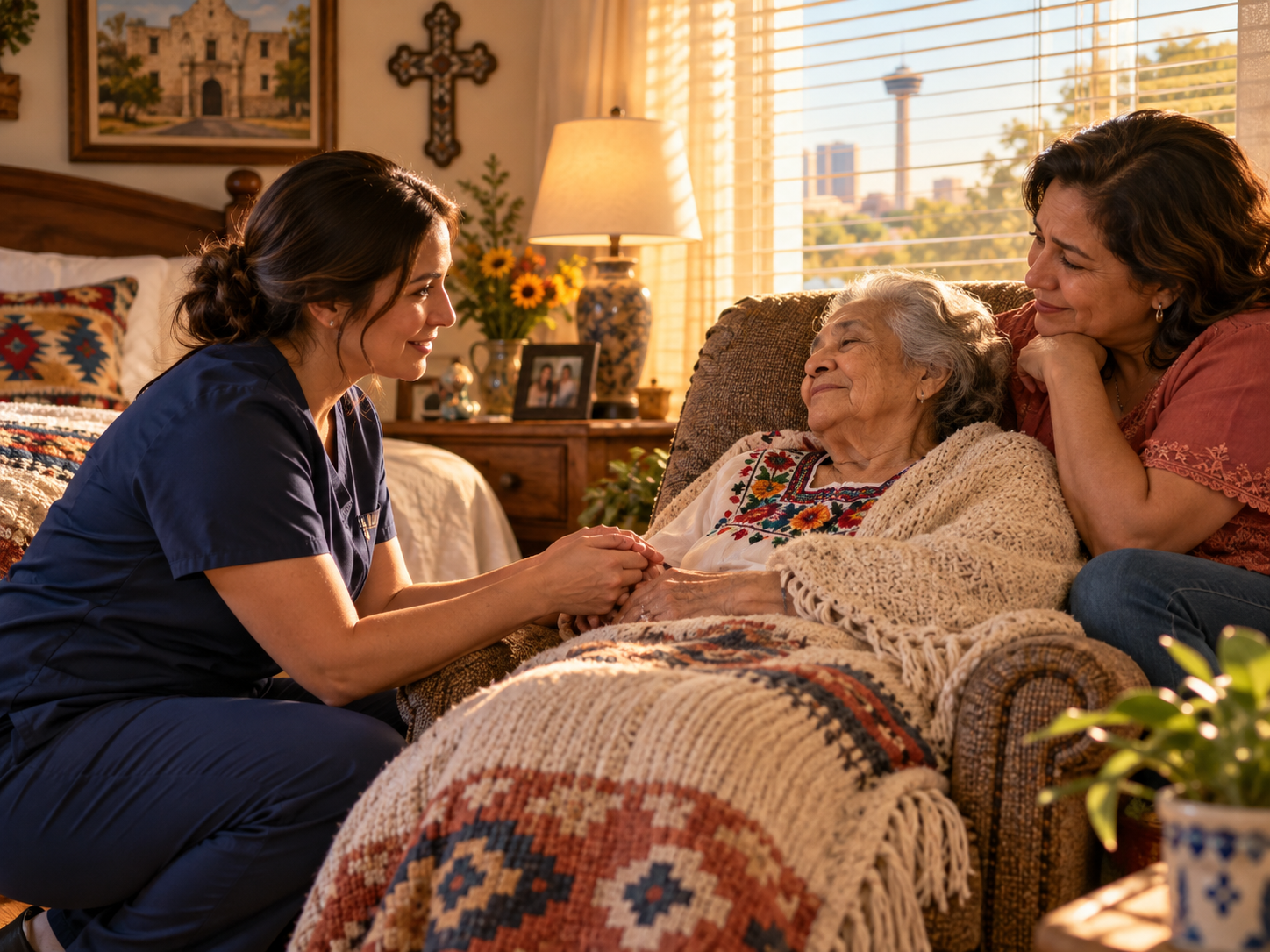
Navigating cognitive decline in an aging parent or spouse is one of the longest and most emotionally complex journeys a family can experience. Unlike conditions such as cancer, which often present measurable tumor markers and clear clinical timelines, neurodegenerative disorders follow an unpredictable and non-linear trajectory. Families often wonder whether severe memory loss alone warrants specialized comfort care, or if they must wait until a catastrophic medical crisis occurs. Accessing hospice for advanced dementia San Antonio families rely on ensures that seniors with end-stage Alzheimer’s disease, Lewy body dementia, or vascular dementia receive comprehensive, comfort-focused medical support that honors their dignity while removing the exhausting physical burden from family caregivers.
Dementia is ultimately a terminal neurological illness. In its final stages, the disease attacks not only short-term memory, but also the brain’s ability to control basic involuntary physical functions such as swallowing, digestion, muscle tone, and verbal communication. Understanding the clinical criteria used to identify end-stage decline empowers families to trade stressful, reactive emergency room visits for peaceful, continuous bedside comfort.
Medicare Guidelines: The FAST Scale for Dementia Hospice Eligibility
To determine when cognitive decline has transitioned into an advanced, hospice-eligible stage, Medicare and clinical physicians rely on the Functional Assessment Staging Tool (FAST). Developed by geriatric researchers, the FAST scale evaluates an individual’s functional decline across seven progressive stages.
Under guidelines established by the Centers for Medicare & Medicaid Services (CMS), a patient with dementia is generally considered clinically eligible for the Medicare Hospice Benefit when they have reached Stage 7 of the FAST scale, accompanied by specific secondary medical complications:
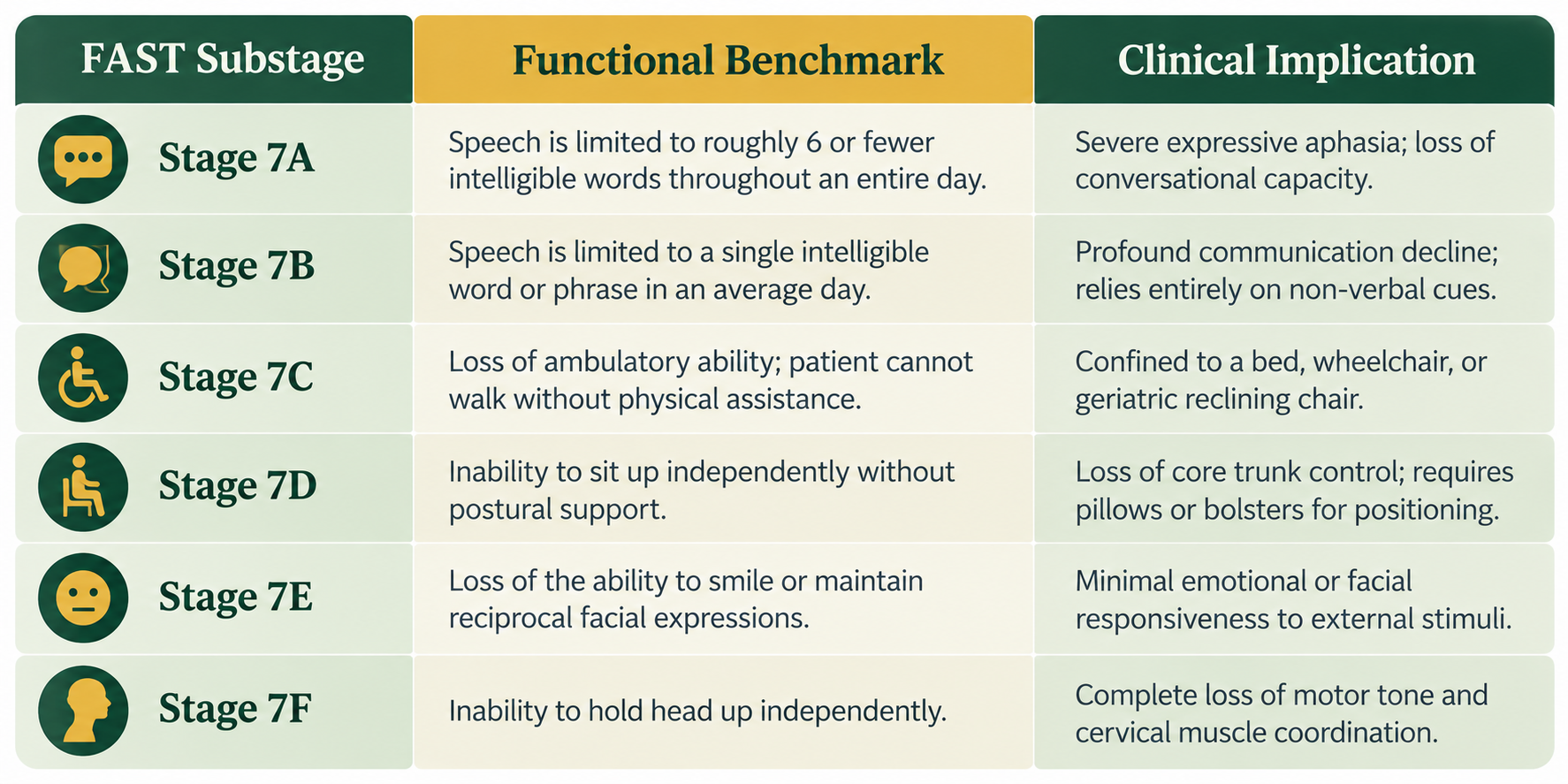
In addition to reaching FAST Stage 7, Medicare criteria require the patient to have experienced one or more significant medical complications within the preceding 12 months, indicating severe biological frailty:
- Recurrent Aspiration Pneumonia: Caused by dysphagia (swallowing difficulties) where food, liquids, or saliva enter the lungs.
- Pyelonephritis or Upper Urinary Tract Infections: Frequent, resistant bacterial infections that resist standard antibiotic therapy.
- Severe, Unintended Weight Loss: A loss of 10% or more of total body weight within the past six months, or serum albumin levels below 2.5 g/dL.
- Multiple Stage 3 or 4 Pressure Ulcers: Compromised skin integrity resulting from prolonged immobility and reduced capillary circulation.
- Recurrent or Persistent Fevers: Frequent low-grade or systemic fevers with no identifiable infectious origin following antibiotic treatment.
Clinical parameters and diagnostic frameworks are detailed by the Alzheimer's Association, supporting timely family discussions regarding end-of-life care planning.
Recognizing Non-Verbal Signs of Pain and Discomfort
One of the greatest fears for families caring for a relative with advanced dementia is that their loved one is in physical pain but cannot find the words to communicate it. When expressive speech is lost, the human body continues to communicate through non-verbal physical signals.
Specialized hospice nurses utilize the PAINAD (Pain Assessment in Advanced Dementia) scale to identify physical discomfort through five specific physiological indicators:
- Breathing Patterns: Rapid, shallow breaths, labored respiration, or periods of hyperventilation rather than effortless, rhythmic breathing.
- Negative Vocalizations: Moaning, groaning, whimpering, or sudden crying out when being turned, adjusted, or dressed.
- Facial Expressions: Tight grimacing, furrowed brows, clenched jaws, or an expression of intense fear or confusion.
- Body Language: Clenched fists, pulled-up knees, rigid muscle tone, resisting care during hygiene routines, or physical guarding of specific limbs.
- Consolability: Inability to be soothed or calmed by a familiar voice, gentle touch, or soft music.
Hospice nurses specialize in subtle symptom titration. By administering targeted liquid sublingual comfort medications that dissolve easily under the tongue or against the cheek, nurses can alleviate pain, muscle spasms, and terminal respiratory congestion without forcing the patient to swallow large pills.
Preventing the Cycle of Emergency Room Transfers
In the advanced stages of Alzheimer’s and related dementias, sudden changes in condition—such as a fever, acute confusion, or swallowing difficulty—frequently trigger panic. Family caregivers or residential facility staff often call 911, sending an already disoriented senior into a bustling emergency room.
For an individual with late-stage memory loss, the hospital environment is terrifying. Loud alarms, unfamiliar clinical staff, fluorescent overhead lights, blood draws, and hours spent on cold transport gurneys cause acute delirium, rapid behavioral agitation, and physical trauma.
Hospice for advanced dementia San Antonio teams replace this reactive cycle with calm bedside intervention. When a symptom changes, families call a direct hospice nurse line instead of 911. A registered nurse arrives directly at the bedside to treat fevers, assess infections, adjust oxygen, or manage pain in the calm, familiar comfort of the patient's own bed.
Supporting Exhausted Family Caregivers
Caring for someone in the final stages of dementia is a 24-hour job that leads to severe physiological depletion. Adult children and elderly spouses frequently spend years lifting, changing, and monitoring their loved one with fragmented sleep, which takes a devastating toll on the caregiver's own cardiovascular health and emotional stability.
Hospice care surrounds the entire family with relief:
- Hospice Aides: Provide gentle, hands-on help three or more mornings a week with bathing, skin hydration, hair care, and clean linen changes.
- Durable Medical Equipment: Specialized hospital beds, alternating pressure mattresses to protect fragile skin, and wheelchair lifts are delivered directly to the residence at no charge.
- Inpatient Respite Stays: If a family caregiver reaches physical exhaustion, becomes ill, or needs to travel, Medicare provides covered 5-day inpatient stays in a contracted clinical facility. To learn how temporary relief works, read our detailed guide on How to Use Medicare’s 5-Day Hospice Respite Benefit in San Antonio.
For additional guidance on caregiver well-being and clinical symptom management, the National Institute on Aging (NIA) provides comprehensive educational publications for families.
Dementia Hospice Support Across Residential Settings
Hospice is a philosophy of care, not a physical building. Whether your loved one is resting at home or residing in a local San Antonio memory care community or assisted living facility, the hospice team works seamlessly alongside the existing environment:
- In Private Homes: Bringing nurses, medical supplies, aides, social workers, and chaplains directly into your living room to support family caregivers. Explore our dedicated In-Home Family Hospice Care protocols.
- In Senior Living & Memory Care: Collaborating directly with facility caregivers and medication techs so your loved one receives specialized end-of-life care in their own private apartment without requiring a stressful move. Discover how we partner with communities on our Assisted Living & Personal Care Home Support page.
- In Skilled Nursing Facilities: Adding an extra layer of clinical advocacy and specialized pain management for long-term care residents through our Nursing Home Hospice Support partnerships across Bexar County.
Families seeking a broader overview of how Medicare covers visits, medications, and equipment can review our foundational guide in Hospice 101.
Unhurried, Dignified Memory Care in San Antonio
Your loved one deserves to live their final chapter with stillness, tenderness, and freedom from pain, surrounded by the people and memories they hold dear.
At AIP Hospice, we approach advanced dementia with clinical precision and deep personal empathy. As a family-owned, CHAP-accredited provider, our registered nurses carry roughly half the patient load of standard corporate agencies. This ensures our bedside visits are never rushed, giving our nurses the time required to sit with your family, listen carefully, and recognize the quietest cues of discomfort. Across San Antonio and within 50 miles of the medical center, we guarantee a 30-minute response time on every emergency call, day or night.
If you are noticing increased swallowing difficulties, significant weight loss, or reduced communication in an aging parent, you do not have to carry the weight alone. Contact AIP Hospice today or call our direct clinical line at (210) 260-0000 to speak with an experienced nurse about an in-home evaluation.